
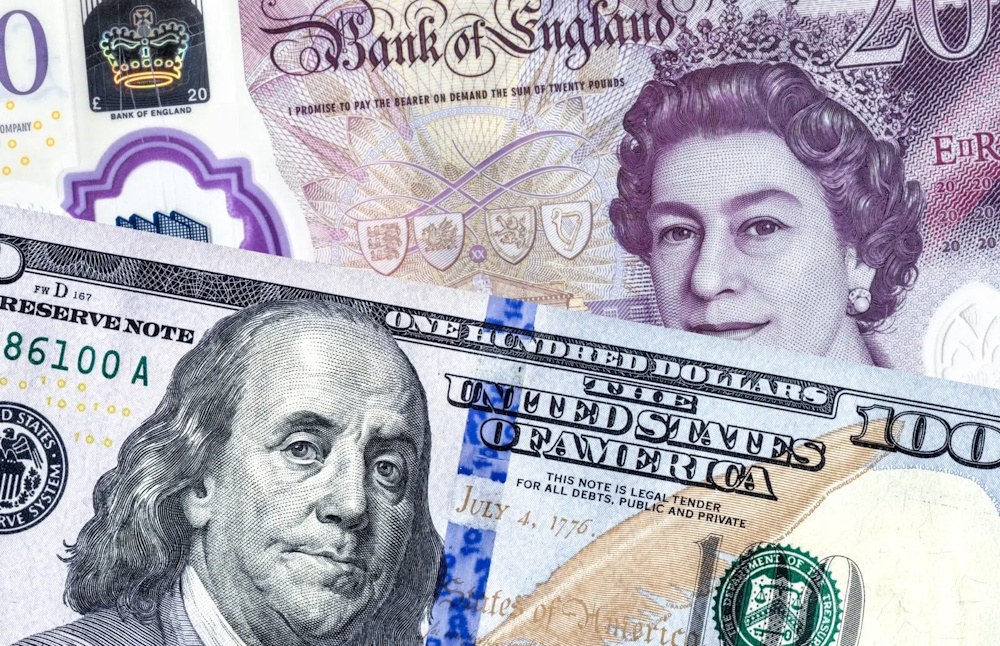
GBP/USD remains in a consolidation phase around 1.3338, reaching its peak since late October, as market participants maintain bullish positions in anticipation of concurrent central bank meetings in December. The rally indicates a combination of macroeconomic and structural influences — such as enhancing sentiment in the UK, robust service-sector performance, and rising anticipations for monetary easing in the U.S. The alteration in rate differentials has redirected capital flows towards sterling, strengthening the pair’s multi-week upward trend. Since early November, GBP/USD has increased by over 2.4%, surpassing both the euro and yen in performance against the dollar, and is currently targeting the 1.34–1.35 range as the next significant resistance level. The UK economy, although not particularly strong, manages to steer clear of contraction due to a solid foundation in services. The November Services PMI increased to 51.3 from 50.5, staying above the 50.0 expansion threshold for the second month in a row. The Composite PMI increased to 51.2, bolstered by robust domestic demand and a gradual reduction in cost pressures. This slight recovery indicates that the private sector has achieved some degree of momentum after a lackluster third quarter.
However, beneath the surface, the structure reveals an uneven quality. Employment decreased at the most rapid rate since February 2025, underscoring ongoing hesitance among employers in the service sector. Output-price inflation has decreased to its lowest level since January 2021, indicating that the Bank of England is making strides in mitigating second-round inflation effects. The current mixed signals — indicating growth alongside subdued hiring — have established a precarious equilibrium: adequate to avert a recession, yet insufficient to alter the Bank of England’s cautious stance. Nonetheless, the data offered a solid buffer in the context of global dollar weakness. The government’s late-November budget announcement marked a significant shift in sentiment. By steering clear of widespread tax hikes and demonstrating a dedication to fiscal discipline, the Treasury provided reassurance to markets that it would not compromise recovery through excessive borrowing. The statement from Labour regarding the maintenance of borrowing limits in the event of an election victory has led to a decrease in long-term risk premiums within the gilt markets. The clarity of this policy has resulted in heightened foreign interest in UK assets, as evidenced by 10-year gilt yields stabilizing at approximately 3.76%, while the pound has strengthened past 1.33 for the first time in more than a month. The message was unequivocal: fiscal predictability reinstated confidence in Britain’s macroeconomic stability. The combination of soft disinflation and modest growth has established a low-volatility environment that is conducive to sterling accumulation in anticipation of the December 18 BoE meeting. Across the Atlantic, the U.S. dollar index declined to 98.88, marking its lowest level in over three months. The action came after a significant shortfall in the ADP employment report, revealing a decline of 32,000 jobs rather than the anticipated increase. This marks the initial negative reading of 2025, indicating the labor market’s reaction to previous tightening measures.
Market participants currently estimate an 89% likelihood of a 25-basis-point reduction by the Fed in December, which would represent the third consecutive cut this year. Anticipations for a minimum of two additional cuts in 2026 have strengthened, leading to a decline in short-term Treasury yields and a reduction in the dollar’s carry advantage. With the ISM Services PMI increasing to 52.6, the moderation in underlying inflation components supports the Fed’s shift towards a more accommodating policy stance. The declining value of the dollar has emerged as the primary driver for the rise of the pound, as GBP/USD has shown stronger performance compared to many other major currency pairs in the first week of December. From a technical perspective, GBP/USD has established a bullish breakout structure on both the 4-hour and daily charts. The pair has clearly broken through the 1.3275–1.3280 confluence zone, establishing it as a robust support level. A daily close above 1.3328 has paved the way for a potential test of 1.3354–1.3363. The current momentum indicates a possibility of extending towards 1.3414 and 1.3469, provided that buyers maintain their influence. The RSI at approximately 73 indicates a state of temporary overbought conditions, suggesting the possibility of short-term exhaustion. A slight pullback to 1.3280 would not jeopardize the overall upward trend, provided the pair remains above 1.3250, where the 20-EMA (1.3283) coincides with the ascending trendline established from the lows of late November. The overall trend indicates a bullish continuation channel — implying that consolidation above 1.33 may lead to another upward movement toward 1.35 in early 2026. The primary driver of GBP/USD’s movement continues to be the divergence in monetary policies. The Federal Reserve is currently perceived as prioritizing rate cuts in the first half of 2026, whereas the Bank of England is anticipated to implement one symbolic cut before entering a pause. The order of events is significant: the U.S. real-rate curve is declining more rapidly than that of the UK, resulting in an expanding yield spread that favors sterling.
Money-market futures suggest that the Fed’s benchmark is expected to decline to approximately 4.25% by mid-2026, in contrast to a BoE rate forecast of 3.75%. This modest difference propels algorithmic capital allocation towards higher-yielding GBP assets. The UK’s blend of fiscal discipline and gradual policy adjustments offers a strategic edge for carry-focused funds and short-term macro desks. This is a significant factor contributing to the persistence of speculative net-long positions on GBP futures, which are currently hovering around 12-month peaks. Even with an optimistic outlook, underlying vulnerabilities remain. In November, there was a decline in UK export orders, while the manufacturing sector continues to show no significant movement. The recovery within the services sector is limited and primarily focused on finance and business services, which exposes the wider economy to potential vulnerabilities and shocks. Should there be a significant drop in energy prices or a deceleration in wage growth, the Bank of England may implement a more rapid easing cycle, which would diminish the yield attractiveness of the GBP. A rebound in payrolls or inflation in the U.S. could readily rekindle demand for the dollar. If DXY manages to stabilize above 100 once more, speculative GBP/USD longs may encounter forced unwinds.
A close below 1.3200 would technically neutralize the current structure, exposing levels of 1.3120–1.3140, with potential for deeper downside toward 1.3050 if selling intensifies. Should GBP/USD maintain a close above 1.3365, the subsequent resistance levels to watch are 1.3414 and 1.3469. A breakout above 1.3470 may lead to an extension toward 1.3500, fulfilling the measured-move projection originating from the 1.3050 base. On the downside, the initial support level is at 1.3280, with subsequent levels at 1.3200 and 1.3120. The technical outlook suggests a potential for further upward movement, provided that the 1.3200 level does not break on a daily closing basis, as this would indicate the onset of a corrective phase. Data from CFTC and short-term futures desks suggest that leveraged funds continue to hold a net long position in GBP, anticipating that fiscal stability paired with a dovish Fed will support sterling as the year concludes. Retail traders exhibit a more cautious approach, decreasing their exposure around 1.3350 in anticipation of the upcoming BoE meeting on December 18 and the Fed meeting on December 11. The potential for overextension persists; however, the pair’s formation of higher lows and robust buying during dips highlights the confidence driving this movement.